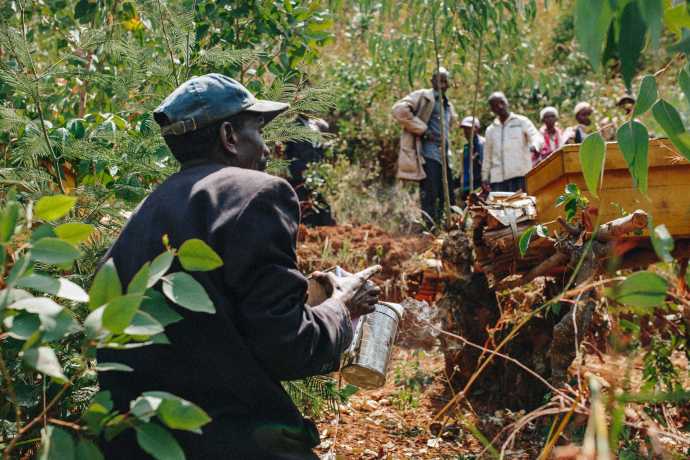
Strengthening agroecology to achieve food self-sufficiency
This new project in Chad began in June 2025. It aims to build the resilience of small-scale farmers in Mandoul Province, located in the south of the country on the border with the Central African Republic. People in this region, as in many parts of Chad, are facing soil degradation caused by the impact of human activities, primarily cotton monoculture.
The project in brief
ThEMATICS
Agriculture
StatuS
In progress
PERIOD
01.01.2025 – 31.12.2026
FUNDING
Private donations
FUNDING
CHF 25'000.--
BENEFICIARIES
100
Description
This leads to soil depletion, whilst the income generated by this crop is negligible and does not enable small-scale farmers to cover the costs of investments in improving soil fertility. All these problems, combined with the effects of climate change, are undermining agro-pastoral production systems and leading to food insecurity, malnutrition and low resilience among the population.
Furthermore, this region is facing a critical humanitarian situation due to the presence of a large number of Central African refugees, a situation exacerbated by the floods of 2024 which caused significant damage to the population (3,705 head of livestock lost and an estimated 20% of the population in a critical phase of food insecurity). The project is structured around two main areas: an immediate humanitarian response in the form of food distribution, and the promotion of environmentally friendly and economically viable agriculture (training in agroecological practices) to improve yields. The association ‘Raps’ (Réseau d’action de partage et de solidarité pour le développement), based in Koumra, is our local partner for this project.
Objectives
-
To restore soil health through a holistic approach and the promotion of agroecological practices, in response to declining soil fertility which is leading to lower crop yields.
-
Strengthening climate-resilient production systems in Mandoul Province.
-
Promoting climate-resilient agriculture.
Activities
-
Identification of people in emergency situations.
-
Distribution of food and basic supplies.
-
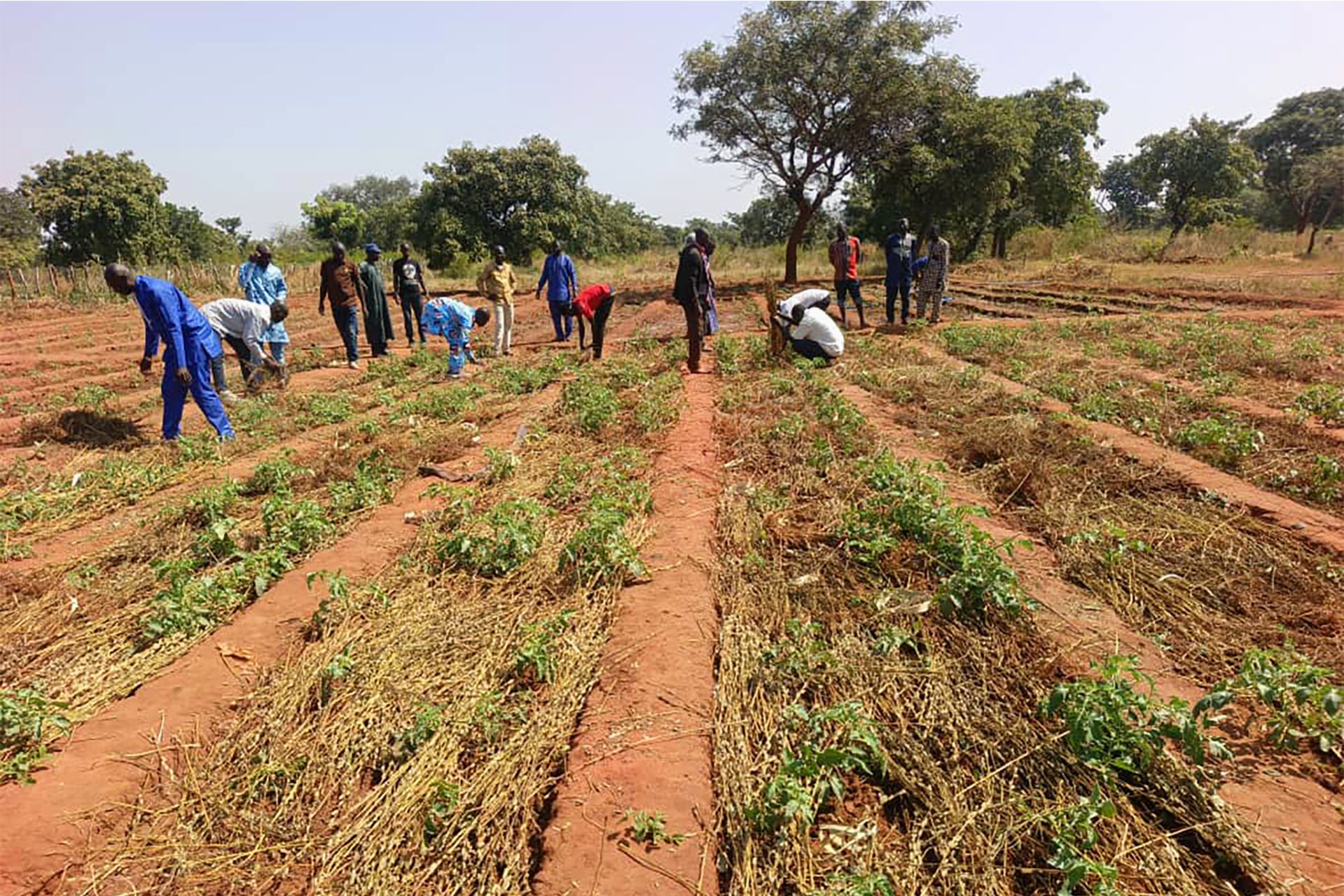
Training of 10 leaders and 30 farmers in agroecological farming.
-
Workshop on sharing best practices in resilient farming.
-
Creation and maintenance of two school gardens.
Testimonials
“Here in Mandang, everyone knows that life has become hard for a woman of my age (95). My strength has left me and my children have gone off to find work elsewhere. This year, my little granary ran empty long before the first rains came.
I spent my days gathering wild leaves and asking my neighbours for a few scraps. But during the lean season, everyone here in the village is short of everything. I often went to sleep on an empty stomach, worried I might not live to see the next day.
The day the project team arrived with the lorry, I thought I was dreaming. They called me by name and handed me this half-bag of sorghum. For some, it’s just a bag; for me, it was life returning to my home.
This sorghum has given me back my strength. I regained enough energy to tend my little garden and no longer had to stay in bed because of weakness.
I no longer need to hold out my hand for a little while every morning. That sack has restored my self-respect.
Knowing that I have enough to eat for the coming weeks has lifted an immense weight from my shoulders. I can finally sleep peacefully.
My prayer: I cannot write, but my heart speaks for me. I thank the people at FH Switzerland who thought of us, the ‘forgotten’ people of the villages. This half-bag of sorghum was the bridge that helped me get through the darkest time of the year. May God bless your hands so that you may help other elderly mothers who suffer in silence." Tetoumal
Results
• 120 people facing severe food insecurity (80% of whom were women) received food aid during the lean season.
• 40 farmers were trained in agroecological techniques (composting, producing organic repellents, mulching, crop rotation and living hedges).
• 10 leading farmers received production kits: wheelbarrows, watering cans and tarpaulins.
• 30 farmers received seeds and kits for making organic repellents.